Betty-Hirsch-Schulzentrum
Concept and implementation of a multisensory orientation system — Stuttgart — 2025 — Nikolauspflege-Foundation for blind and visually impaired people
A multisensory orientation system
For the Betty Hirsch School Center of the Nikolauspflege in Stuttgart, the communication design agency typenraum developed a multisensory orientation system that goes far beyond conventional wayfinding. It is designed equally for blind people, visually impaired people, people with multiple disabilities – and for users without impairments.
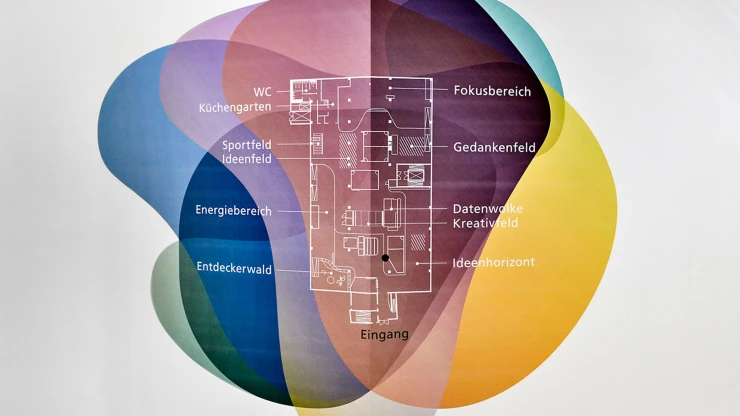
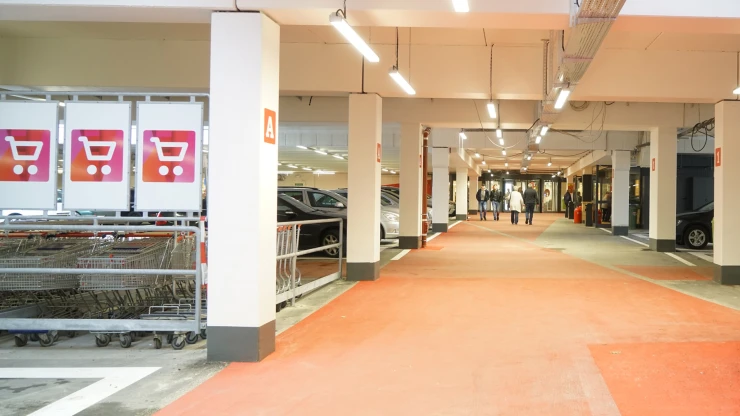
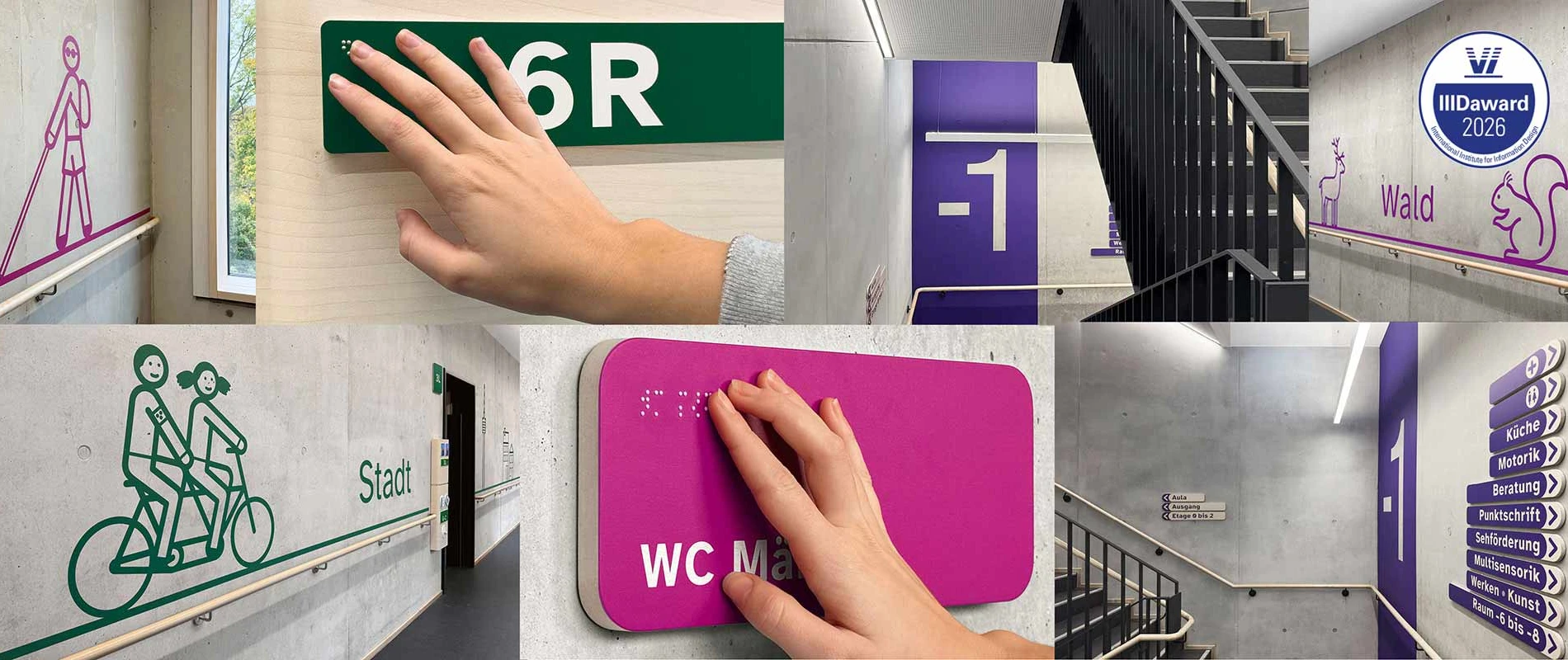
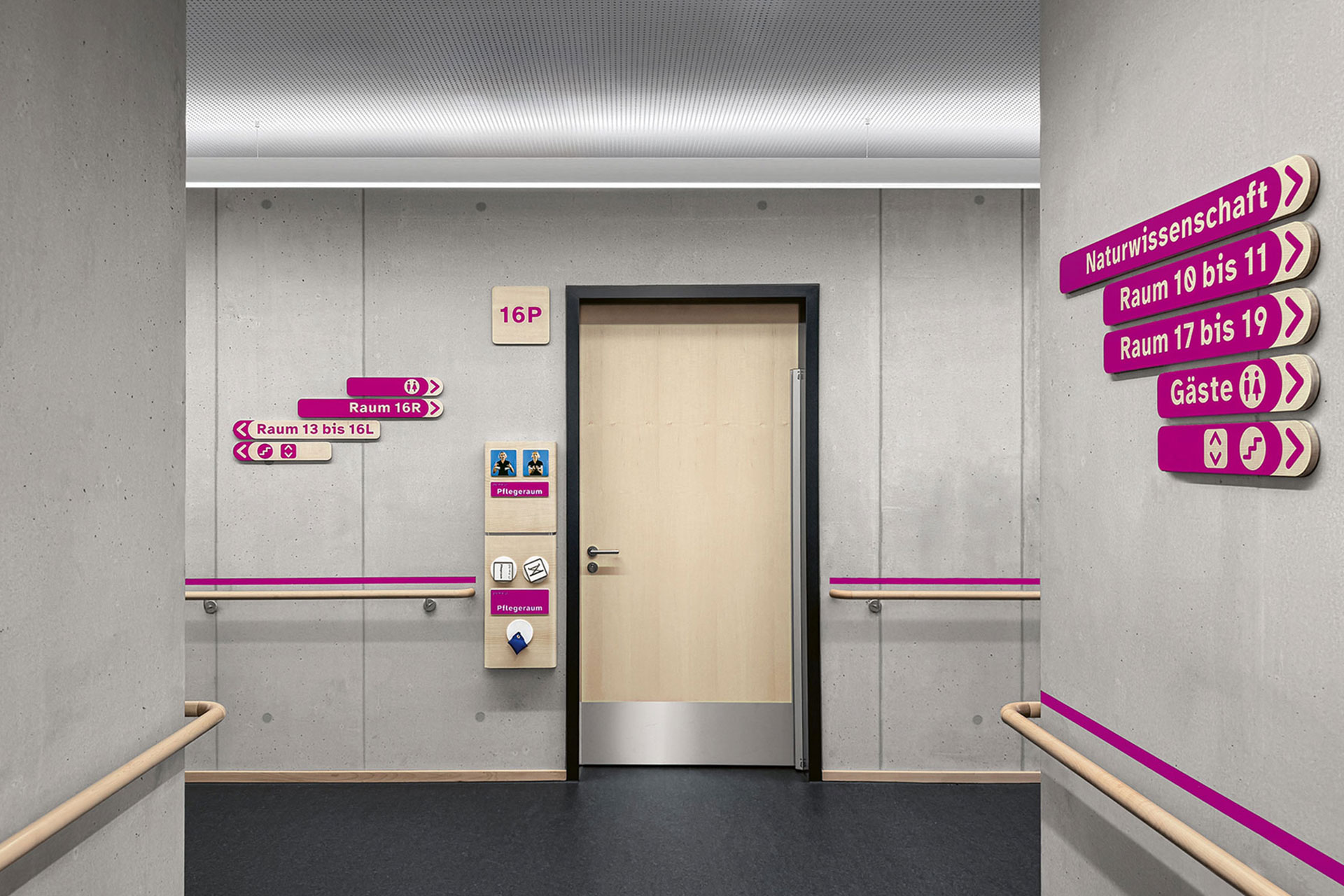
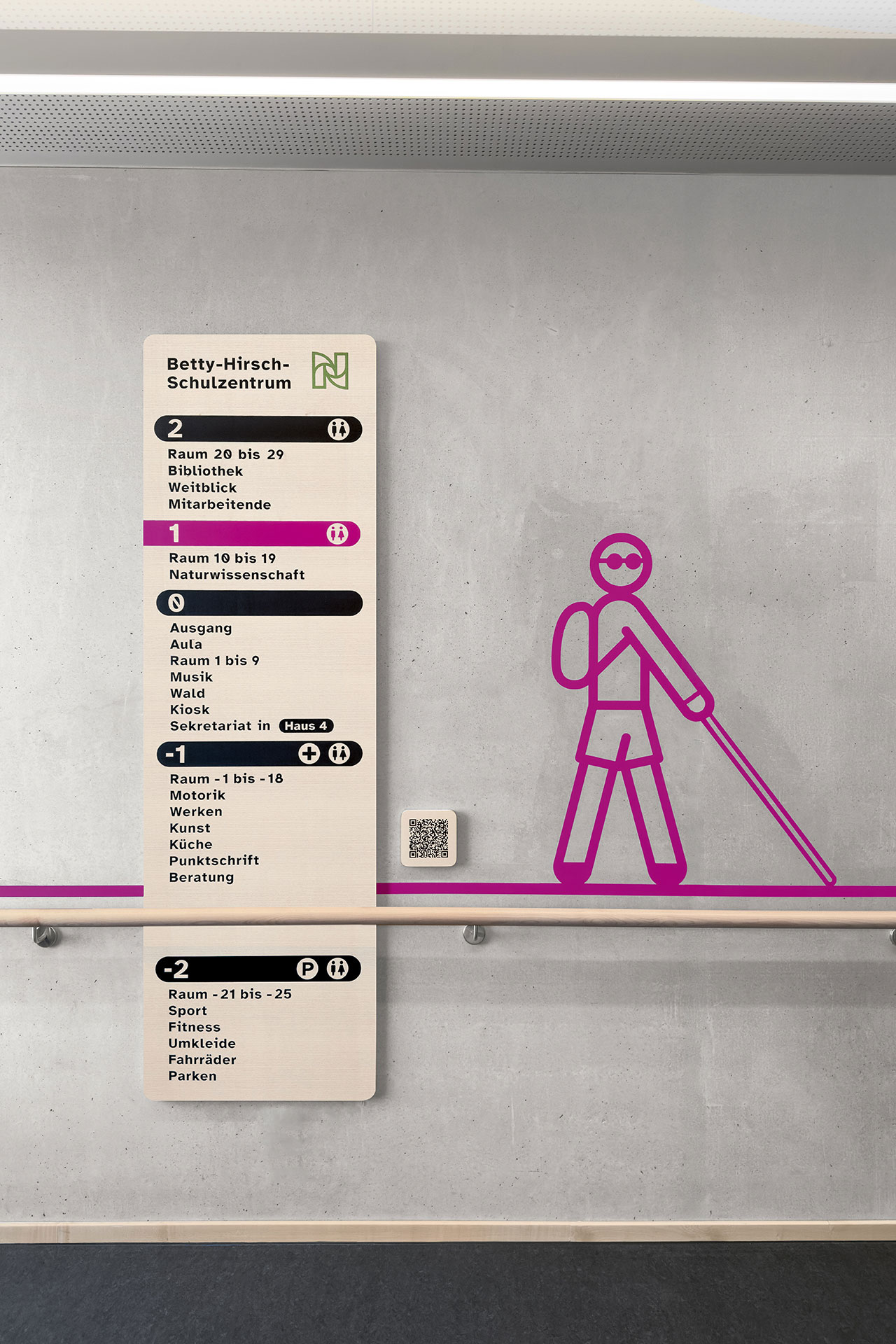
The aim was to make scientifically grounded everyday orientation tangible. Clear contrasts of colors, sizes, and spatial axes create clarity and a sense of security. The floors are color-coded, enabling quick and intuitive orientation within the building. Tactile-visual elements and perceptible materials address multiple senses and support independent navigation.
Orientation becomes directly experienceable in the space: color-coded guiding lines and large-scale, reduced illustrations – such as forest or city motifs – accompany the routes along the corridors and create distinctive identities for individual areas. Pictograms, clear typography, and strong color contrasts support visual orientation without overwhelming the space.
Effective interplay between design, research, and social responsibility
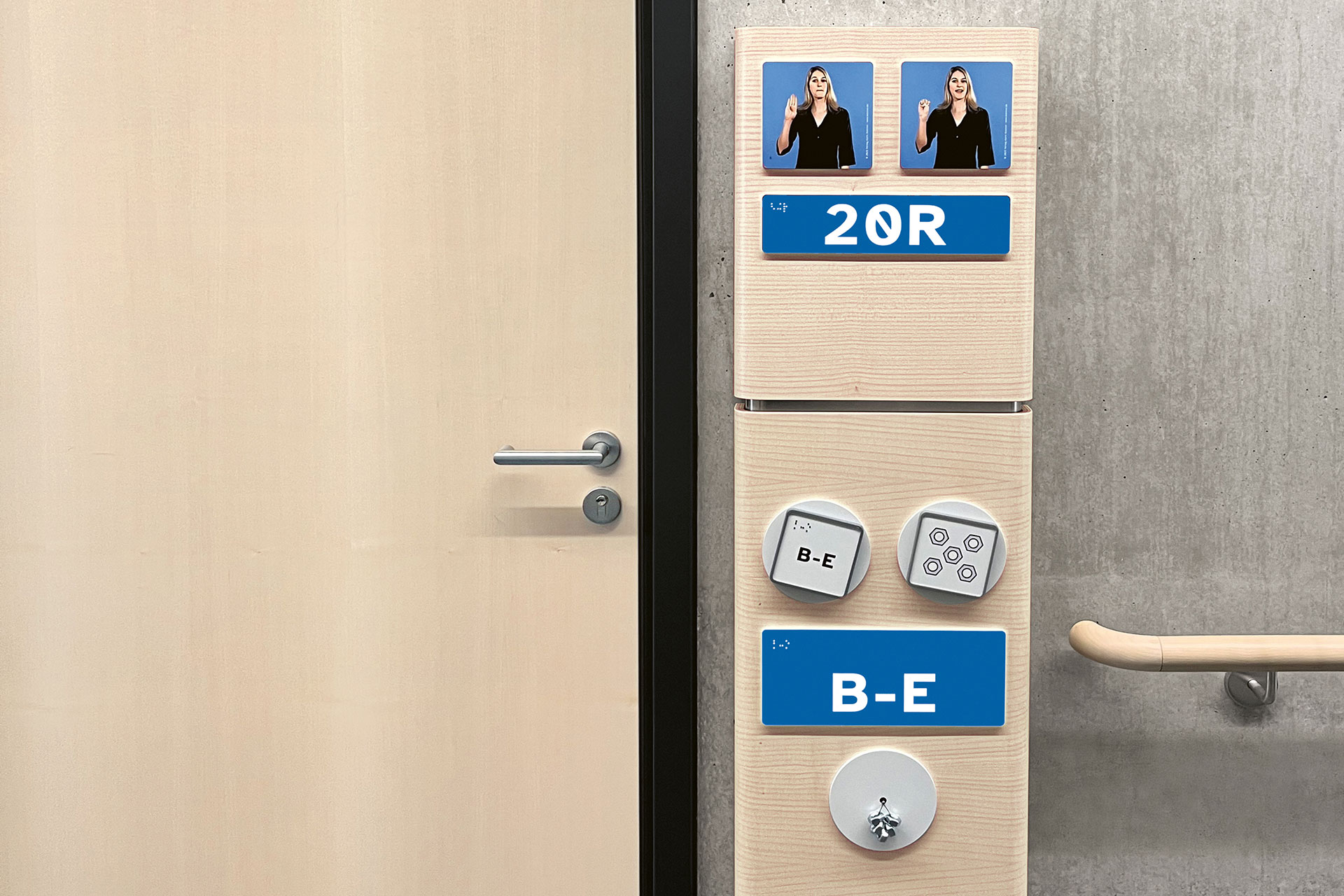
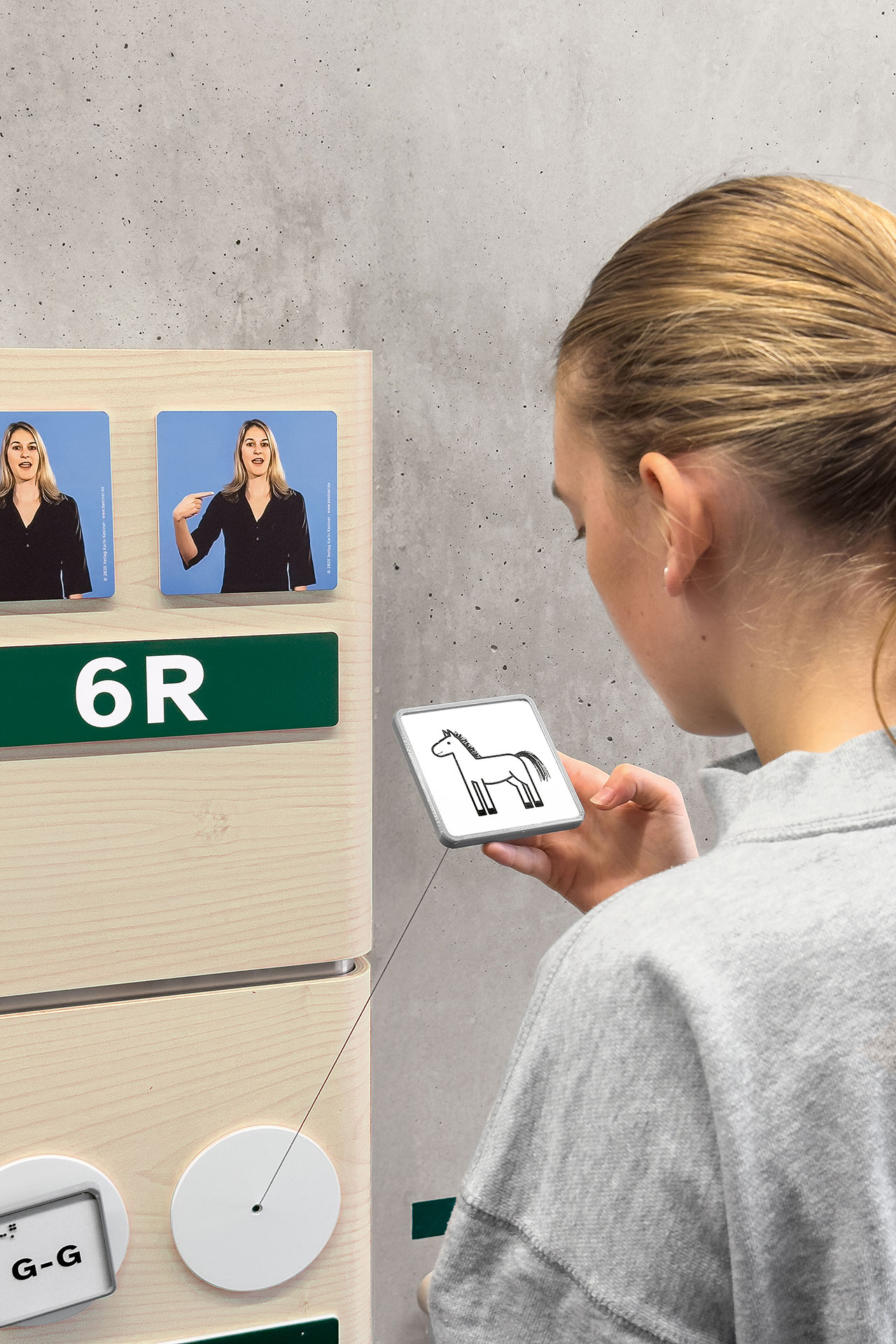
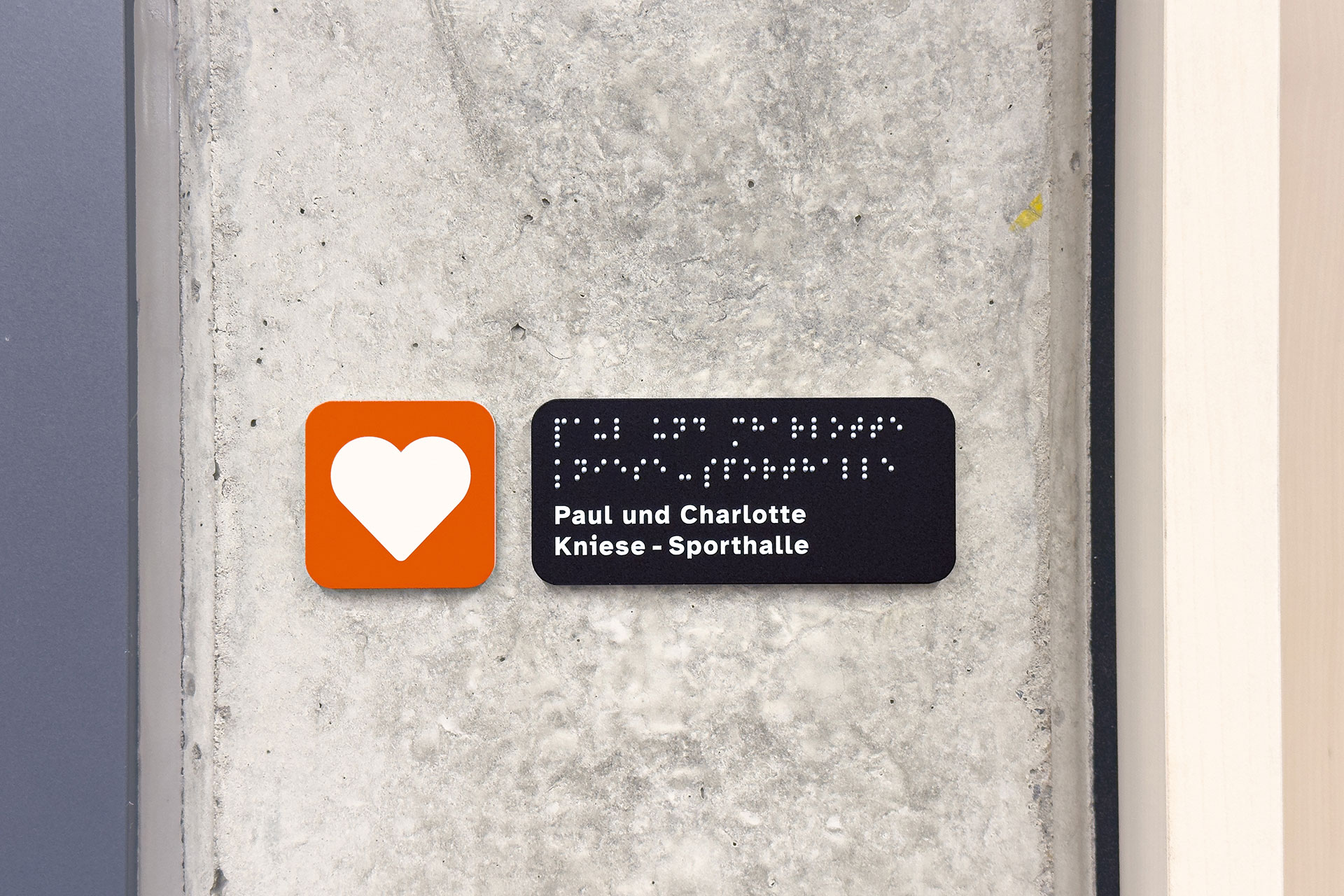
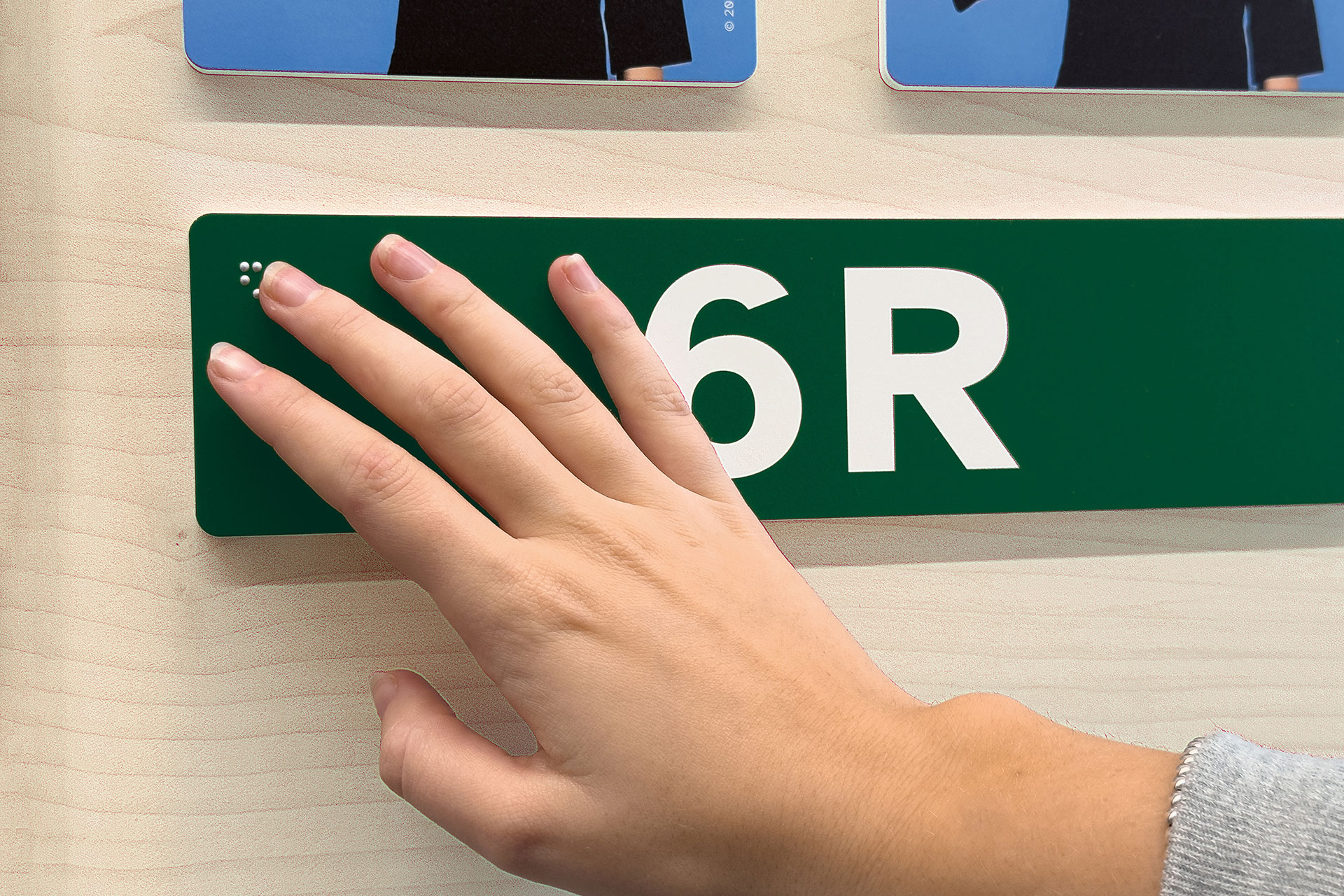
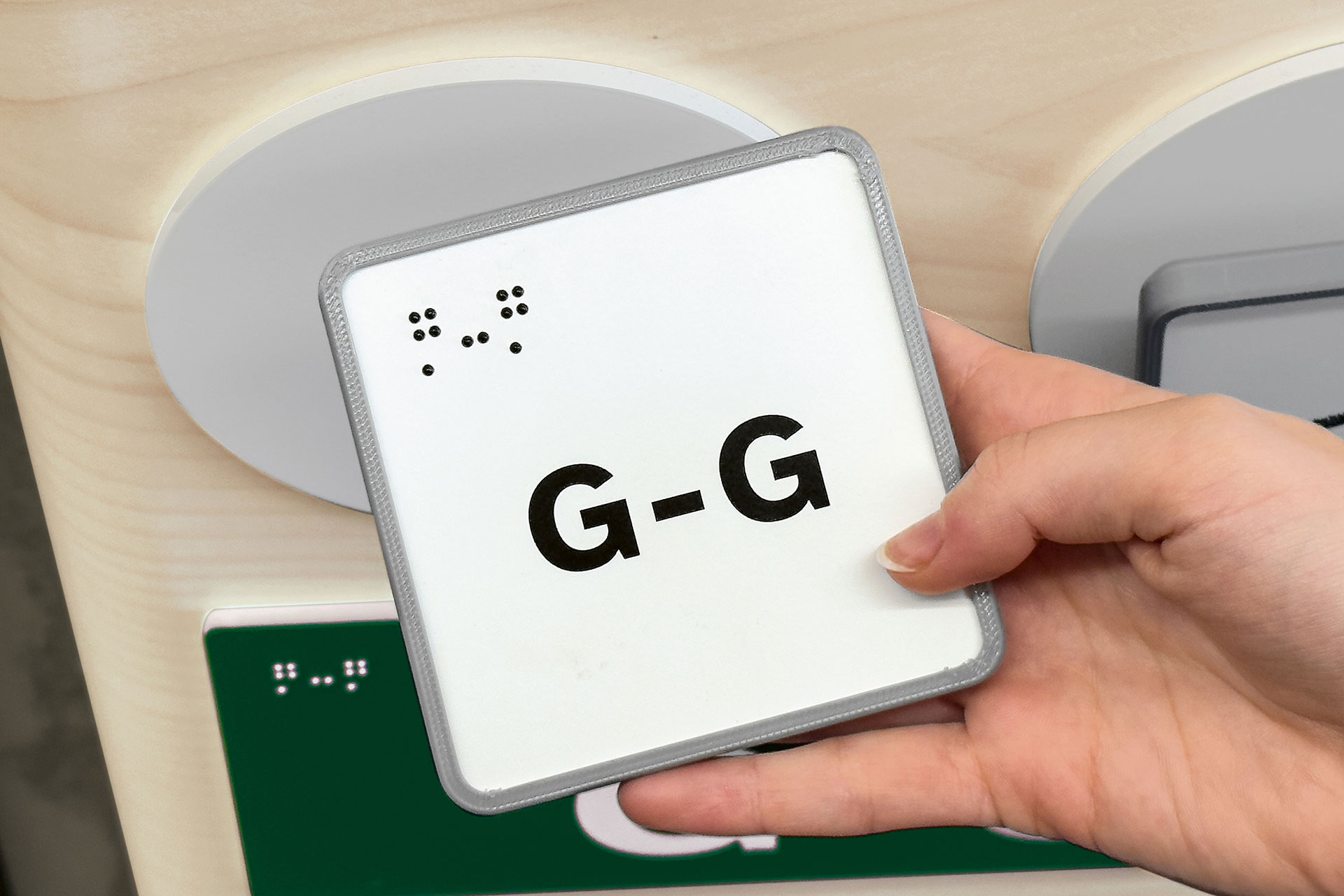
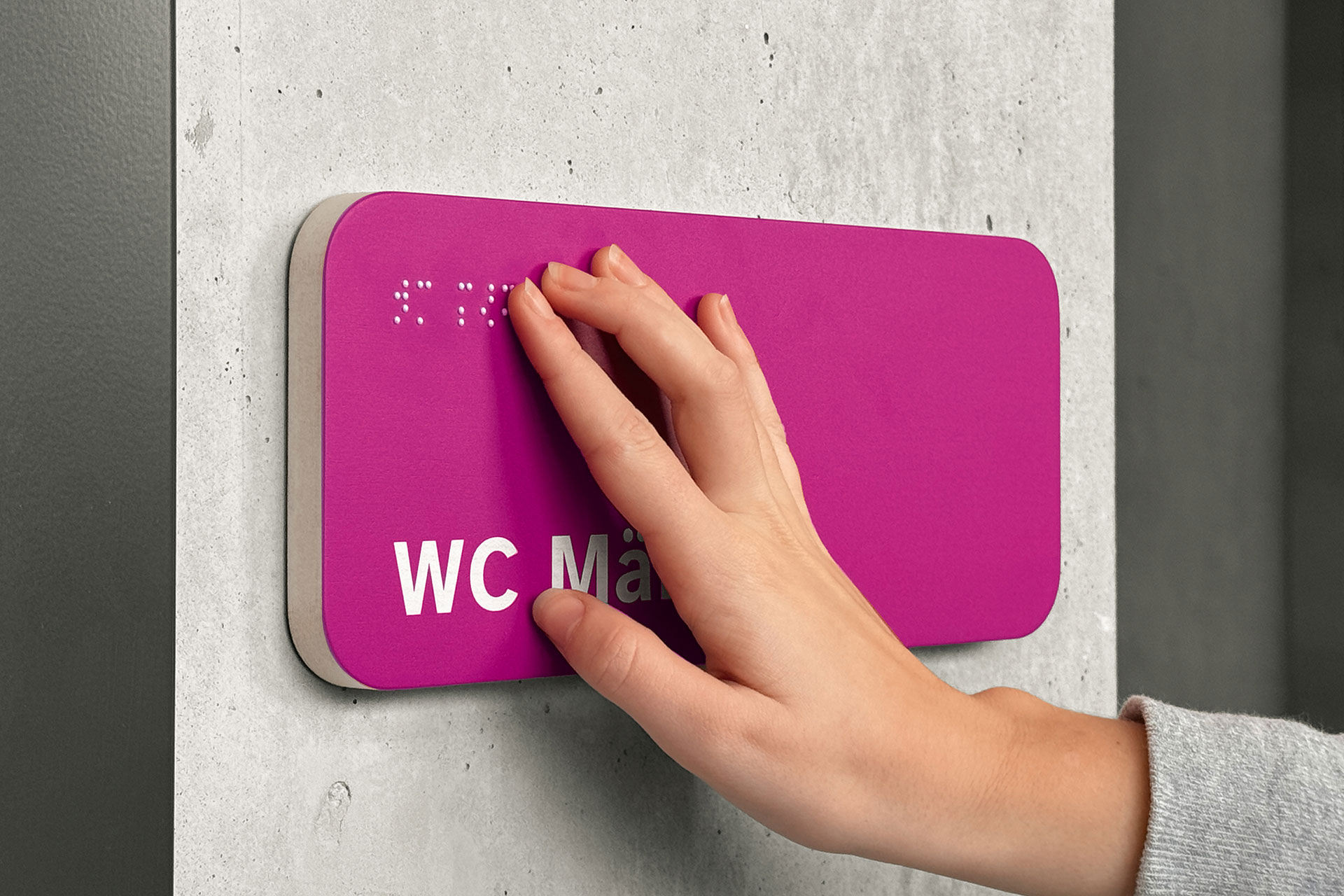
Central information elements combine visual lettering, Braille, and tactile symbols. Movable, haptic modules allow users to actively explore and compare information by touch. The system is complemented by sign-language pictograms and digital extensions such as QR codes. The result is a layered wayfinding system that brings seeing, touching, and understanding together – and understands orientation as an integral, natural part of the architectural experience. With this wayfinding system, the Nikolauspflege sets new standards for barrier-free orientation in educational buildings.